You wake up, you brew a pot, you take that first sip — and something’s just off. It’s bitter, or thin, or strangely sour. Maybe a little flat. You figure it’s the beans. Maybe you grabbed the wrong bag, or they’ve been sitting on the shelf too long. So you try a new blend, and it’s still… not quite right.
Here’s a little secret most coffee packaging will never tell you: nine times out of ten, the flavor problem in your cup has nothing to do with the beans themselves. It’s the grind. Specifically, it’s the grind size — how coarse or fine your coffee is ground before it meets hot water. This one variable quietly controls almost everything about how your coffee tastes.
The good news? Once you understand what’s actually happening in your brewer, grind size becomes one of the easiest dials to turn. You don’t need a degree in food science or a professional-grade setup. You just need to know what to look for — and what to listen to in your cup. Let’s dig in.
Why Grind Size Matters
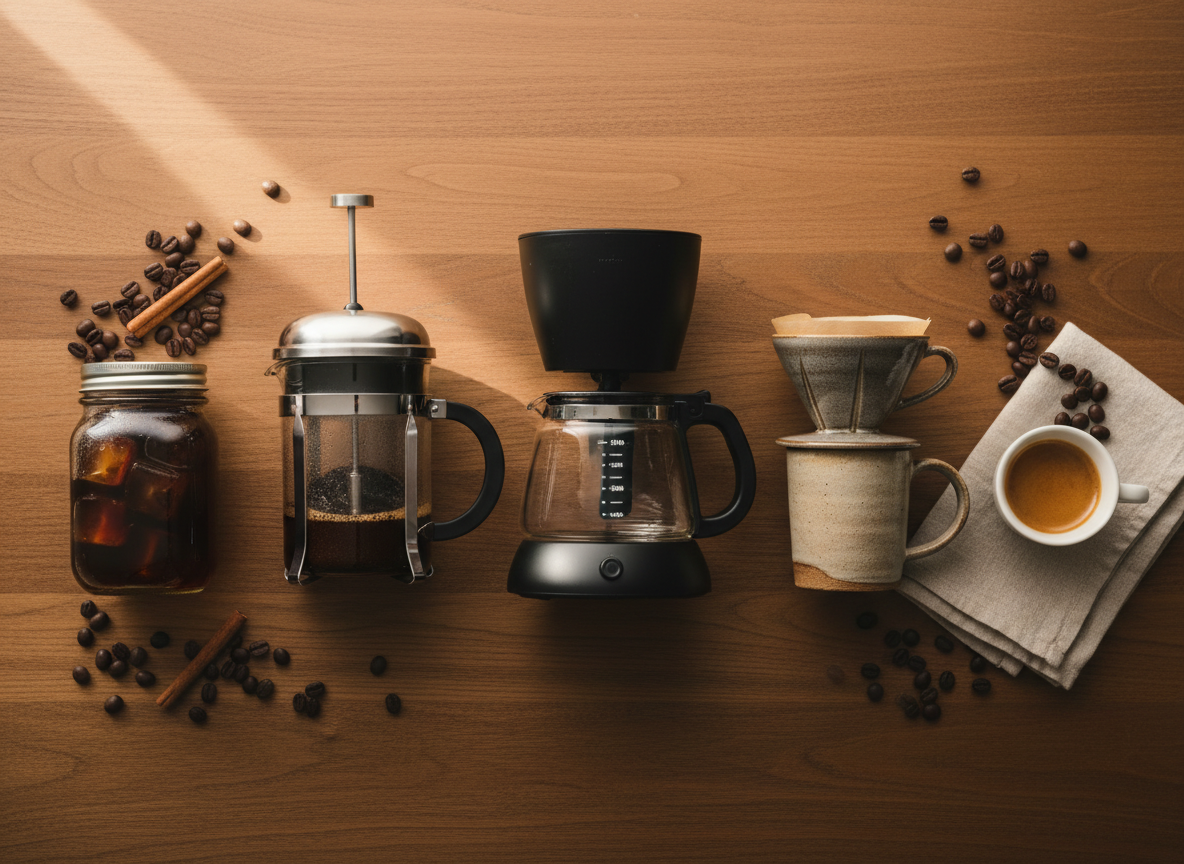
When you brew coffee, hot water is doing one job: dissolving flavor compounds from the coffee grounds. That process is called extraction. And grind size is what controls how fast — and how completely — that extraction happens.
Think of it this way. A finer grind creates more surface area for water to touch. More surface area means water can dissolve flavors faster. A coarser grind creates less surface area, so extraction slows down. Simple enough — but here’s where it gets interesting.
Extraction happens in stages. The first flavors to dissolve are the bright, acidic, and fruity ones. Then come the sweet, balanced flavors. Last are the dry, bitter compounds. Grind too fine (or brew too long) and you pull all of those bitter notes into your cup — that’s over-extraction. Grind too coarse (or brew too briefly) and you stop before the sweetness develops — that’s under-extraction, which tastes sour, weak, or hollow.
Here’s an analogy that makes it click: think about steeping tea. Leave the bag in too long and the cup turns bitter and astringent. Pull it out too soon and it tastes like vaguely flavored water. Coffee works the same way — grind size is how you control that timing without touching a clock.
Fine vs. Coarse: What’s Actually Happening in Your Cup
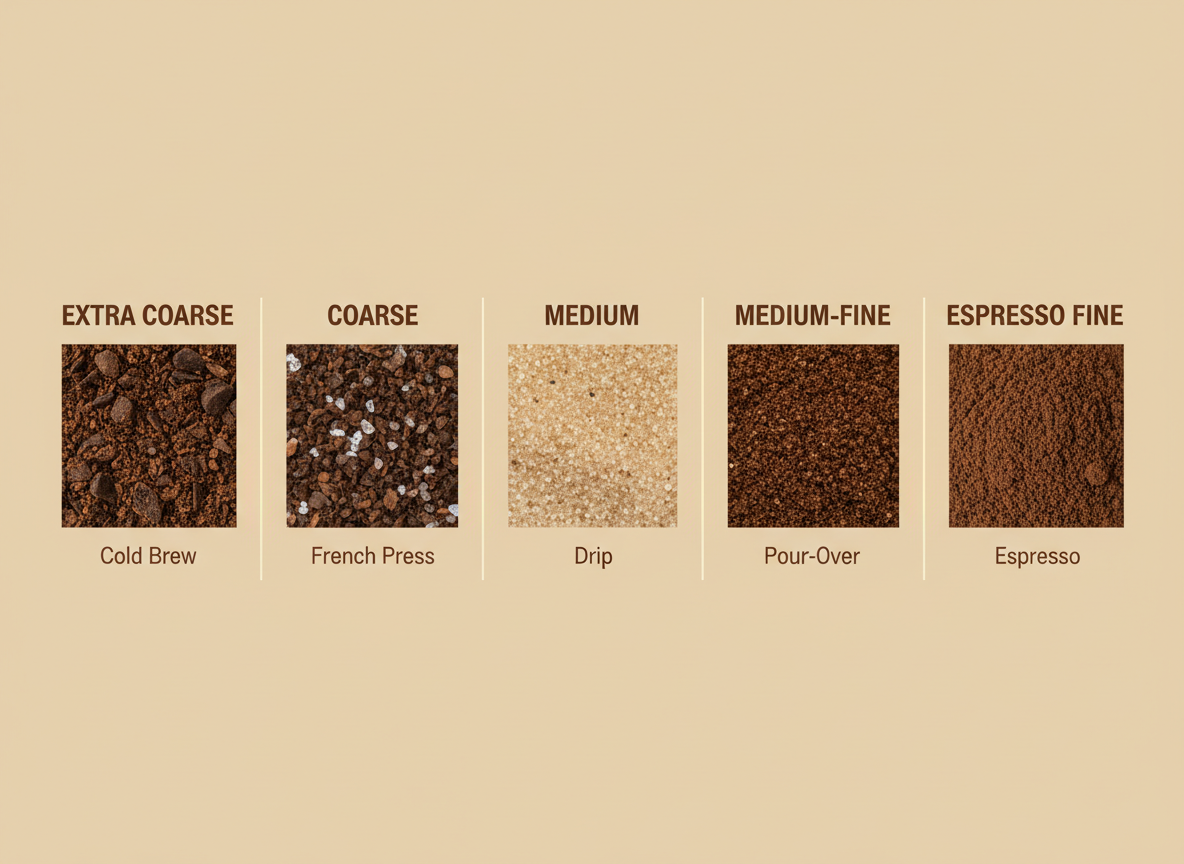
Coffee grind size runs a wide spectrum — from ultra-fine Turkish coffee grounds (almost a powder) all the way to the chunky, pebble-like particles used for cold brew. Everything in between is a sliding scale, and where you land on that scale should match your brew method.
Fine grinds = more surface area = faster extraction = intense, concentrated flavor. That’s exactly what espresso needs. But put a fine grind in a French press — where grounds steep in water for four minutes — and you’ll pull every bitter compound out of those tiny particles before you even press the plunger.
Coarse grinds = less surface area = slower extraction = lighter, cleaner flavor. That’s the magic behind cold brew — water has 12 to 24 hours to slowly coax flavors out of those big, chunky grounds. Use an espresso-fine grind for cold brew and you’d end up with something unbearably bitter before lunchtime.
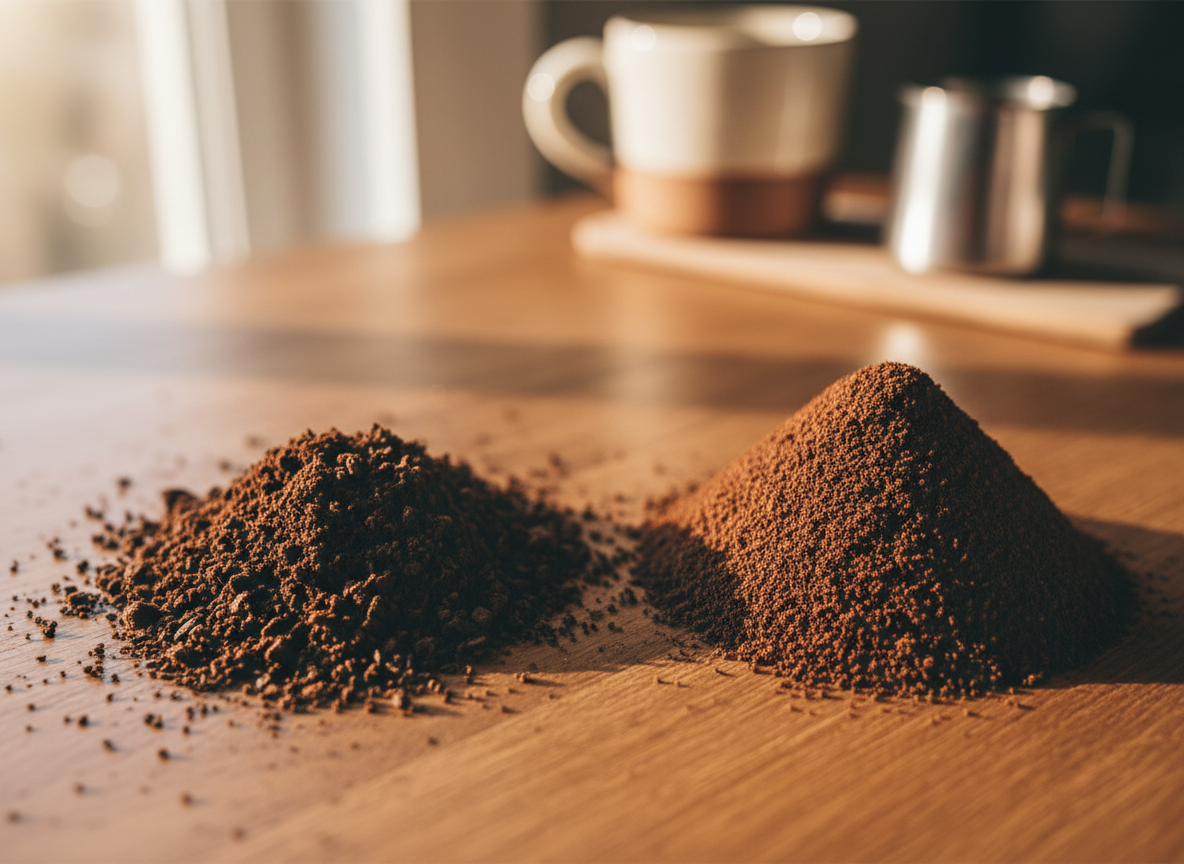
There’s one more thing worth mentioning here: consistency. It’s not just about the setting you dial in — it’s about whether every particle in your grounds is actually the same size. And that depends entirely on your grinder.
A burr grinder works completely differently. It crushes beans between two abrasive surfaces — either flat or conical burrs — that are set a precise, fixed distance apart. Every particle that passes through comes out the same size. That uniformity means water extracts every ground at the same rate, producing a clean, balanced, and predictable cup. Change the distance between the burrs, and you change the grind size across the board — consistently, reliably, every single time. It’s not about being a gear snob. It’s just physics: uniform inputs produce uniform outputs. Uniform outputs produce coffee you can actually understand, improve, and enjoy.
A blade grinder — the kind that looks like a tiny food processor — spins a flat metal blade at high speed, essentially chopping beans into random, irregular shards. Some particles end up fine, some coarse, some powdery. It’s the equivalent of trying to cut vegetables with a lawnmower: technically it works, but the results are chaotic. When water hits that mixed bag, fine particles over-extract in the same time coarse particles under-extract. You end up tasting both problems at once — a flat, confusing cup that’s simultaneously sour AND bitter, with a muddy finish that’s genuinely hard to improve no matter how carefully you calibrate everything else.
The Simple Grind Size Guide
Not sure where to start? Use this as your reference. These are practical starting points — not rules set in stone — and your goal is to use them as a launch pad for your own tasting and tweaking.
Espresso — Extra Fine
Texture-wise, think powdered sugar or flour — very fine, almost silky. This level of fineness creates the resistance that espresso machines need to build pressure and pull a proper shot. Without that resistance, water rushes through too fast and you get a thin, sour, undercooked shot.
Watch your shot timing to dial it in. If your espresso pulls too fast (under about 25 seconds) and tastes sour or weak, go finer. If it pulls too slowly (over 35 seconds) and tastes harsh or bitter, go a touch coarser. Small adjustments make a big difference here — we’re talking a single notch on your grinder dial.
Pour-Over — Medium-Fine
Picture table salt, or slightly finer sand. A medium-fine grind lets water flow through the grounds at a controlled, even pace — long enough to develop sweetness and complexity, but not so long that bitterness creeps in.
Pour-over is where grind size really shines, because the method has very little margin for error — in the best way. If you’re brewing a single-origin bean you really want to taste, this is the method that’ll let every subtle note come through. Getting the grind dialed in here is genuinely one of the most rewarding tweaks you can make.
Drip Coffee Maker — Medium
Classic table salt. This is the sweet spot for the automatic drip machine — probably the most popular home brewer out there — and it’s the most forgiving grind size on this list. Most pre-ground coffee from the grocery store is aimed at this range, which is why it works reasonably well right out of the bag.
Reading Your Espresso: What Fast and Slow Shots Are Telling You
Espresso is the most feedback-rich brew method there is — and once you know how to read it, your machine basically tells you what to adjust. Here’s how to decode what you’re seeing:
Shot Pulls Too Fast (Under ~25 seconds)
If your espresso rushes out in 15–20 seconds or less, the water is finding the path of least resistance — your grind is too coarse. Under-extracted shots look pale, thin, and watery. They taste sour, sharp, or hollow, like there’s flavor missing from the middle. The fix: go finer by one or two notches on your grinder, then pull again.
Shot Pulls Too Slow (Over ~35 seconds)
If your espresso barely drips out and takes forever, the puck is too dense — your grind is too fine. Over-extracted shots look very dark, sometimes almost black at the end of the pour. They taste harsh, dry, and bitter, with an unpleasant aftertaste that lingers. The fix: go coarser by one or two notches, then pull again.
What a Dialed-In Shot Looks Like
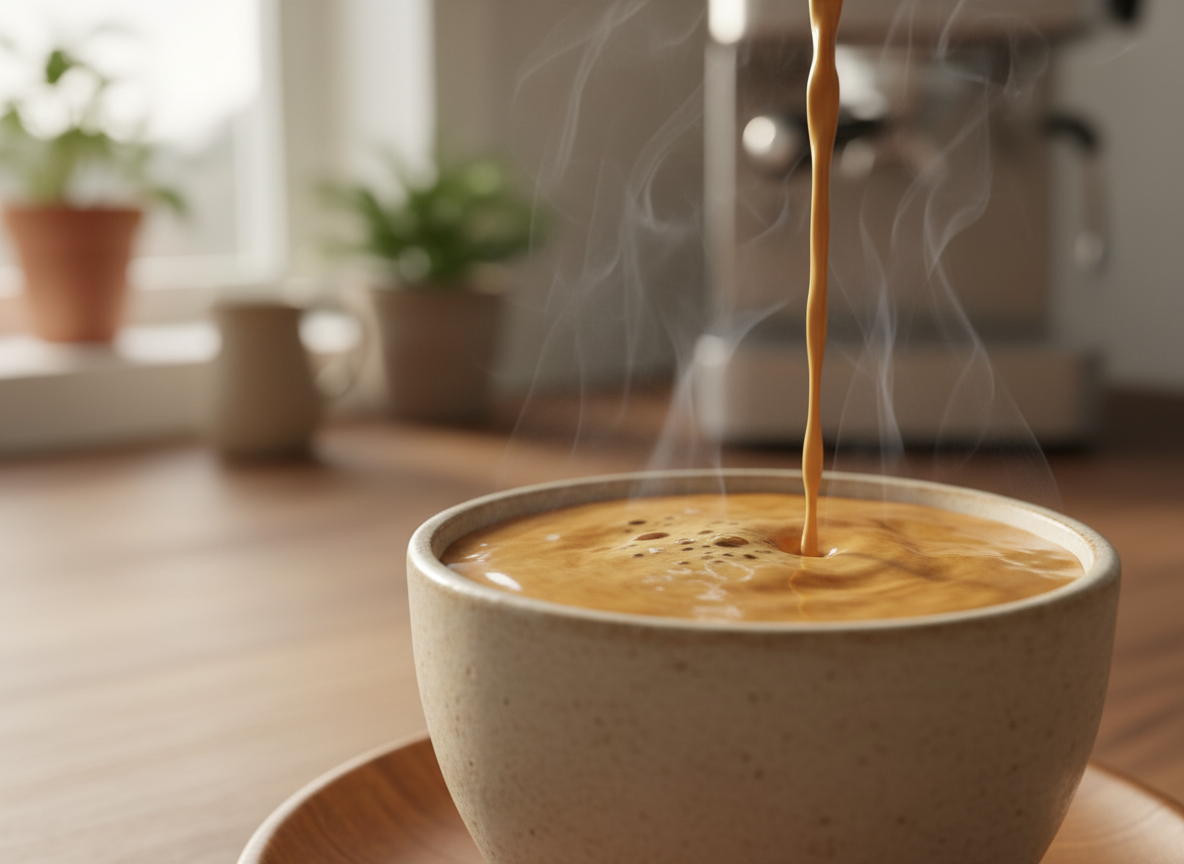
A properly extracted espresso pulls in roughly 25–35 seconds and flows like warm honey — slow, steady, and a deep caramel-brown color with reddish tones. The crema should be thick, golden, and hold for at least 30–60 seconds. It tastes balanced: a little sweet, a little bitter, with complexity you can actually notice. That’s what you’re chasing. And grind size is the single most powerful lever to get you there.
One important note: always lock in your dose (the amount of ground coffee) and your yield (the weight of espresso in the cup) before adjusting grind. Changing too many variables at once makes it impossible to know what’s working. Grind size, dose, and yield are the three pillars of espresso dialing — tackle them in that order.
That said, “reasonably well” isn’t the same as “great.” If your drip coffee consistently tastes flat, weak, or slightly bitter, grind size is the very first thing to check — before you blame the beans, the machine, or the water. Even a small adjustment can make a noticeable difference in your everyday cup.
French Press — Coarse
Think breadcrumbs, or coarse sea salt — chunky and clearly textured. French press is an immersion brew method, meaning the grounds sit in hot water for the entire brew time (usually around four minutes). A coarse grind slows extraction down so you don’t end up with a bitter cup by the time you press.
A coarse grind also keeps fine particles from slipping through the mesh filter and into your cup — nobody wants gritty coffee. If your French press has been tasting bitter or muddy lately, grinding coarser is almost always the fix. It’s one of the most common home brewer mistakes, and one of the easiest to correct.
Cold Brew — Extra Coarse
We’re talking raw sugar crystals or pebble-sized grounds — the coarsest you’ll go. Cold brew steeps for 12 to 24 hours in cold (or room-temperature) water, which is an extremely long extraction window. Without an extra-coarse grind slowing things down, all that steep time would pull massive amounts of bitter compounds out of the grounds.
Done right, cold brew produces coffee that’s smooth, naturally sweet, and remarkably low in acidity — a completely different experience from hot-brewed coffee, even with the same beans. It’s worth trying at least once, and the grind is the reason it works the way it does.
- Your bean: Dense, high-altitude beans tend to be harder and may need a slightly finer grind to extract properly. More porous, lower-grown beans extract faster, so they can go a touch coarser.
- Your roast: Light roasts are denser and often need a finer grind or longer brew time to open up fully. Dark roasts are more soluble — they’ve been roasted longer and are more porous — so they can go slightly coarser without losing flavor.
- Your recipe: Brew time, water temperature, and your coffee-to-water ratio all interact with grind size. Change one and you may need to nudge another to stay balanced.
- Your taste: This is the most important one. If your coffee tastes bitter, go coarser. If it tastes sour, thin, or hollow, go finer. Your palate is the ultimate guide — and it’s already better than you think.
Baratza Encore ESP — Best for Beginners
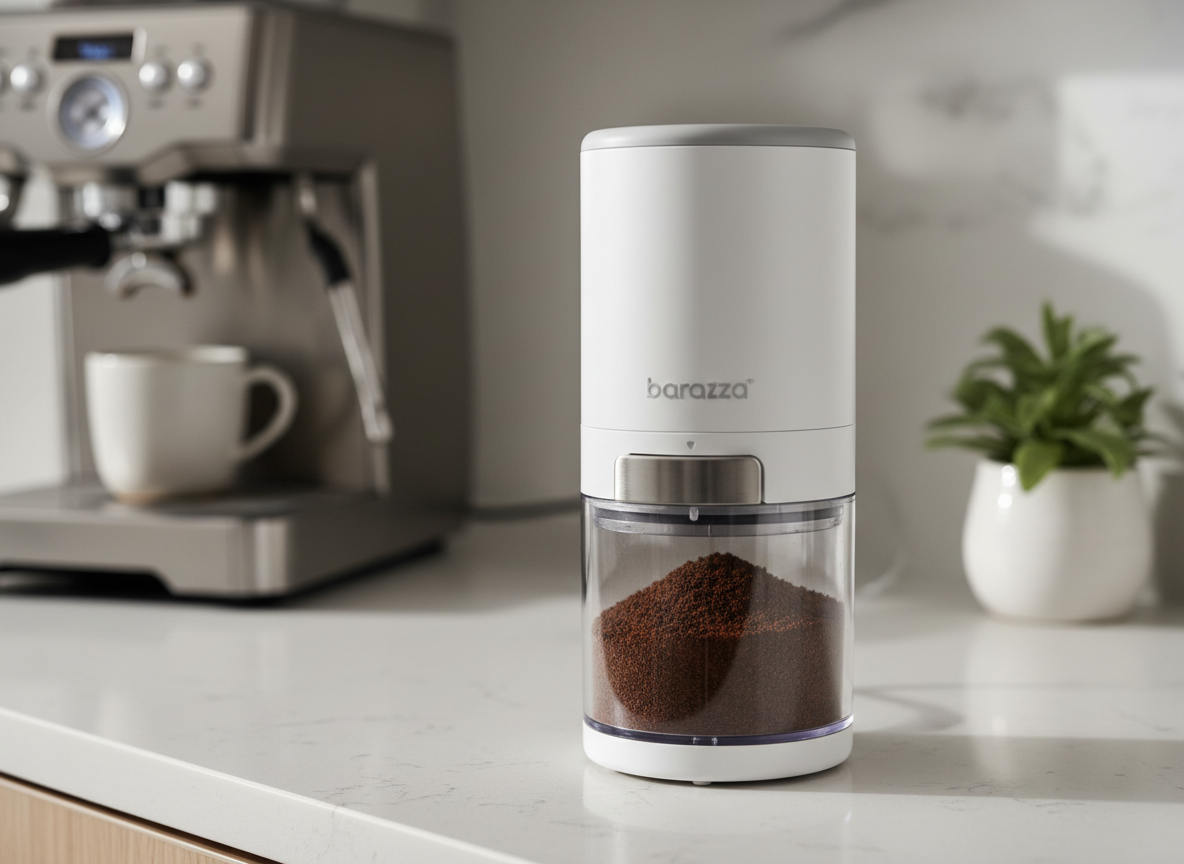
The Encore ESP is the grinder we’d recommend to most people reading this article. It’s a conical burr grinder that covers the full range from coarse French press all the way down to espresso-fine — which is notable at this price point. Many entry-level grinders claim espresso capability but can’t actually get fine enough for a proper shot. The Encore ESP genuinely can.
It’s built to last (Baratza’s customer support and repairability record is legendary in the coffee community), quiet enough not to wake up the house, and simple enough that you’ll actually use it every day. No frills, no steep learning curve — just consistent, reliable grinds across every brew method.
Best for: Beginners and intermediate home brewers who want one grinder that does everything.
Brew methods: Espresso, pour-over, drip, French press, cold brew.
Standout feature: True espresso-range capability at an accessible price.
Shop the Baratza Encore ESP on Amazon →
Breville Smart Grinder Pro — Best for Precision
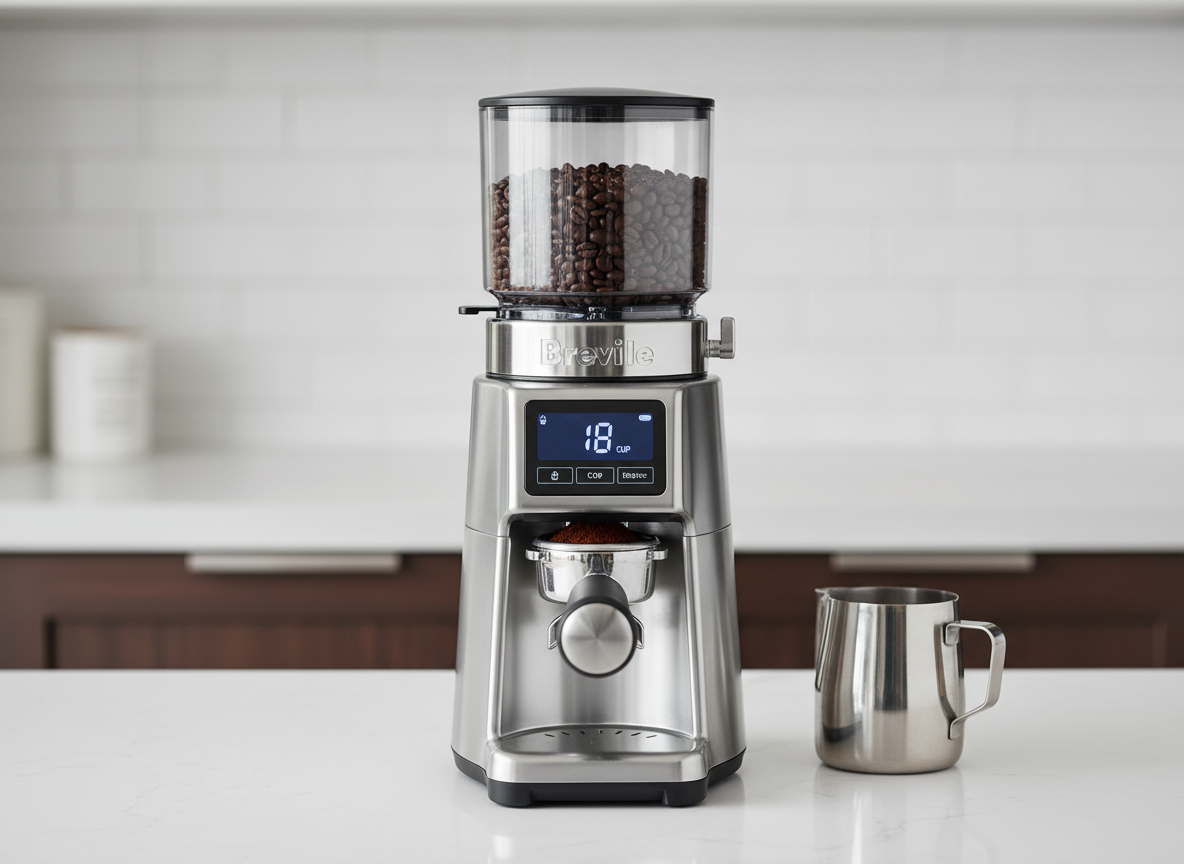
If you want more control and don’t mind spending a little more, the Smart Grinder Pro is a serious step up. It offers 60 precise grind settings across a wide spectrum — from ultra-fine espresso to coarse French press — giving you much finer resolution than most grinders in this class. When you’re dialing in espresso and a single notch on a basic grinder is too big a jump, having 60 settings to work with is a genuine advantage.
The programmable dosing is a standout feature: set your grind time once and it’ll dose the same amount every morning without you hovering over it. It also has a digital display and accepts both a portafilter (for espresso) and a grounds container — so it works equally well whether you’re pulling shots or brewing a pour-over.
Best for: Espresso-focused home brewers who want repeatable precision.
Brew methods: Espresso, pour-over, drip, French press.
Standout feature: 60 grind settings + programmable dosing timer.
Shop the Breville Smart Grinder Pro on Amazon →
Fellow Opus 2 — Best for Versatility
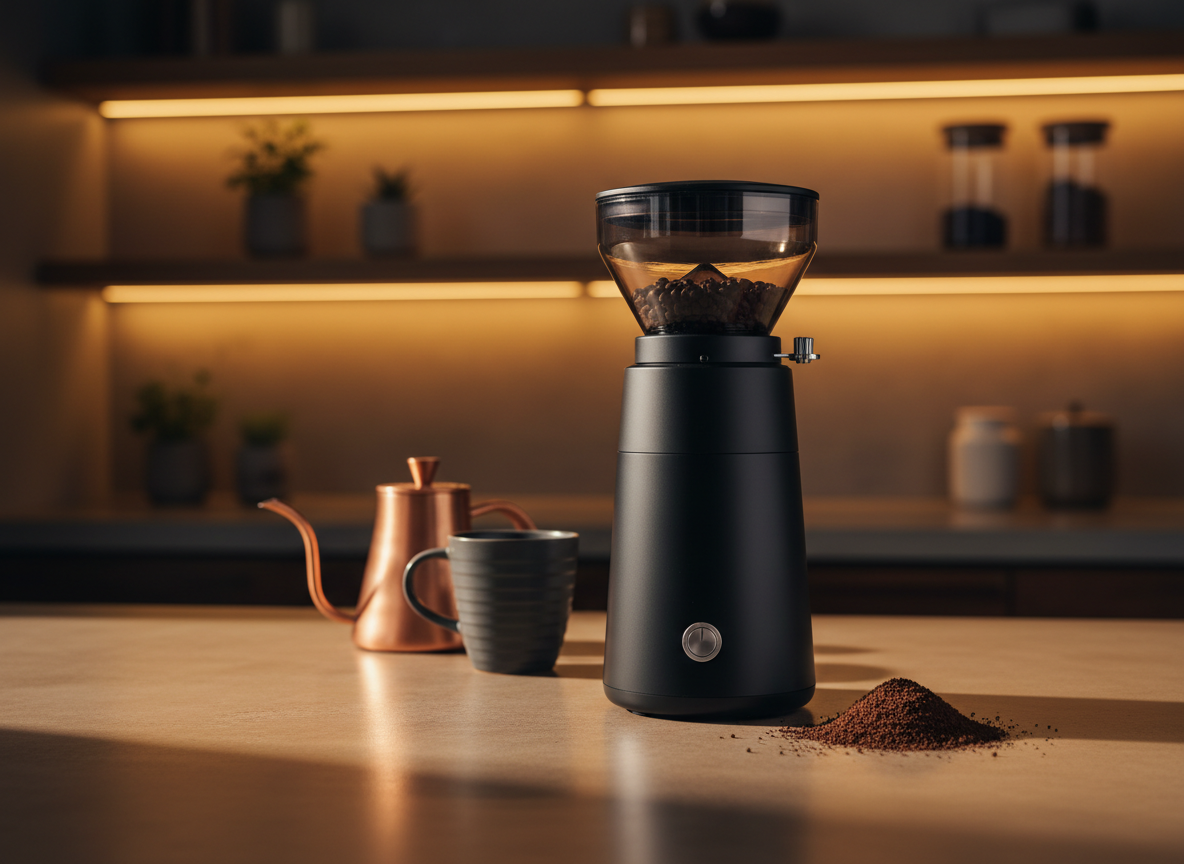
The Fellow Opus 2 is the grinder for the home brewer who wants to do it all — and do it well. It’s built to handle the full grind range from espresso to cold brew, which sounds like a given but is genuinely rare to execute well. Most grinders sacrifice one end of the spectrum for the other. The Opus 2 doesn’t.
The fine micro-adjustment system gives you 41 settings with additional fine-tuning between each one — effectively hundreds of possible grind positions. That level of precision is what lets you actually dial in espresso with the nuance the method demands, while still producing the chunky, consistent coarse grind that makes great cold brew. It’s also one of the better-looking grinders out there, if that matters to you (and honestly, when it’s living on your counter, it does).
Best for: Adventurous home brewers who want espresso-to-cold-brew range with fine precision.
Brew methods: The full spectrum — espresso, pour-over, drip, French press, cold brew.
Standout feature: Micro-adjustment system covering the entire grind range without compromise.
Shop the Fellow Opus 2 on Amazon →
Our Burr Grinder Picks for Home Brewers
If you’re ready to upgrade your grinder — or buying your first burr grinder — these three are the ones we keep coming back to. They cover a wide range of budgets and brewing styles, and all three will genuinely change how your coffee tastes. We’ve linked each one to Amazon for convenience.
Grind Settings Are Just a Starting Point
Here’s something the chart above won’t tell you: the “right” grind size is always personal. The guides above get you in the right neighborhood, but dialing in your perfect cup depends on a few things that are unique to you and your setup.
One practical tip: change only one variable at a time. It’s tempting to adjust the grind, the dose, and the brew time all at once — but then you’ll have no idea which change made the difference. Shift one thing, taste it, decide if you’re moving in the right direction, then move to the next variable. This is how you actually learn your setup, rather than just getting lucky occasionally.
Every small improvement is worth celebrating. Going from “something’s off” to “this is pretty good” is a genuine win. Going from “pretty good” to “actually delicious” is even better. That progression is the whole joy of home brewing.
— GRINDER GUIDE —
Find the Right Grinder for Your Brew
We’ve tested and ranked the best burr grinders across every budget — from approachable entry-level picks to precision machines worth every penny. Whether you’re pulling espresso or brewing cold brew, we’ll help you find the one.
A Quick Word on Grinders
We touched on this earlier, but it’s worth saying plainly: the type of grinder you use matters almost as much as the setting you dial in. A blade grinder chops beans into uneven, inconsistent pieces — which leads to mixed extraction and flavor that’s hard to improve no matter how carefully you calibrate your brew.
A burr grinder — whether flat burr or conical burr — crushes beans between two grinding surfaces, producing uniform particles. Uniform grounds extract evenly, giving you a cleaner, more consistent, and more predictable cup every time. It’s not about being a gear snob. It’s just physics.
If you’re in the market for an all-in-one espresso setup, the Breville Barista Express has a built-in conical burr grinder that lets you control grind size right on the machine. It’s one of our favorite options for home brewers who want to skip the extra counter space and go straight to pulling great shots. We cover it in detail in our full review if you’re curious.
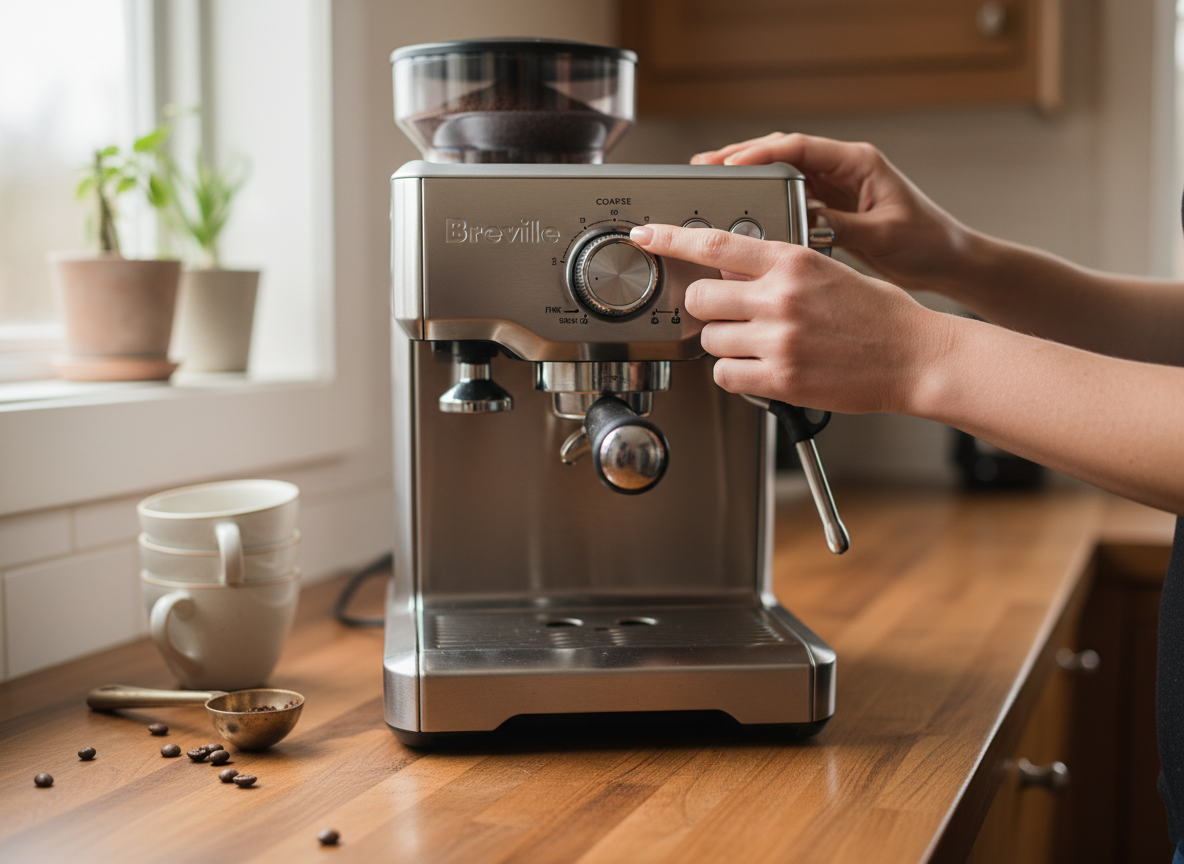
The Breville Barista Express and Why Its Grind Dial Matters
Getting grind size right is one of the single fastest ways to level up your home coffee game — and unlike buying new beans or new gear, it costs nothing to try. You already have everything you need. The next time your cup tastes off, resist the urge to blame the bag and try adjusting your grind by just one or two notches instead. Taste it. Notice what changed. Adjust again if needed. That’s the whole process, and it’s more rewarding than it sounds.
You don’t need a barista certification or a $2,000 espresso machine to make coffee that genuinely excites you in the morning. You just need a little curiosity, a willingness to experiment, and the confidence to trust your own palate. That’s what Home Café Co. is all about. If you’re ready to keep exploring, check out our website, there’s always something new to try, one cup at a time.
As an Amazon Associate I earn from qualifying purchases. If you purchase through links on this page, I may earn a small commission at no extra cost to you.
If you’re brewing on a Breville Barista Express, you have something most home espresso setups don’t: a built-in conical burr grinder integrated directly into the machine. That’s a genuine advantage — no separate grinder to buy, no transferring grounds, and the whole system is designed to work together. But here’s the catch: most people set the grind dial once during setup, never touch it again, and then wonder why their shots aren’t great.
The Barista Express has two grind adjustment points: an outer dial for broad grind-size ranges (1 through 8, with 1 being finest), and an inner burr adjustment (accessible from the top of the hopper) for fine-tuning within each range. Most home users only ever discover the outer dial — but real dialing happens with both, in tandem.
Here’s why that matters: as your coffee beans age, they lose moisture and become more porous, which means they extract faster. A grind setting that produced a perfect shot on Monday with a fresh bag can produce a bitter, over-extracted mess two weeks later with the same beans. The same principle applies when you switch roast levels or origins. Your grind setting is a living adjustment, not a set-and-forget number.
Our practical starting point for the Barista Express: begin with the outer dial at 5 and the inner burr at the midpoint. Pull a shot, note the time and taste, then adjust from there using the extraction cues above. Give it at least two or three pulls at each setting before making another change — your palate needs a reference point to judge against. It takes a bag or two to fully dial in a new bean, and that’s completely normal. The process is part of the craft.
Whichever grinder you go with, it’ll pair beautifully with a well-dialed machine. If you’re building out a full espresso setup from scratch, our guide on how to build a coffee shop worthy espresso setup at home walks through every component — from machine to grinder to accessories — so you can put it all together with confidence.


Leave a Reply