How to Get the Perfect Espresso Grind Size at Home
Master the grind. Pull the perfect shot. No café required.
If you’ve ever pulled an espresso shot at home that tasted bitter, sour, watery, or just…off, your grind size may be the first thing you should check.
Espresso is incredibly sensitive to grind size because the brewing process happens quickly. The coffee needs to be ground fine enough to give the water plenty of surface area to extract flavor, while still allowing water to move evenly through the coffee bed.
And that’s why having a good grinder—and knowing how to use it—can make such a huge difference in your home coffee setup.
The good news? You don’t need to be a professional barista to learn how to dial in espresso.
Once you understand what your grounds should look like, how to adjust your grinder, and what your espresso is telling you, getting a delicious shot becomes much less intimidating.
Disclosure: This post may contain affiliate links. As an Amazon Associate, I earn from qualifying purchases at no additional cost to you. I only recommend products I genuinely love and think would make your home coffee experience better. Thank you for supporting Home Cafe Co.! 🤎
What Should Espresso Grounds Look Like?
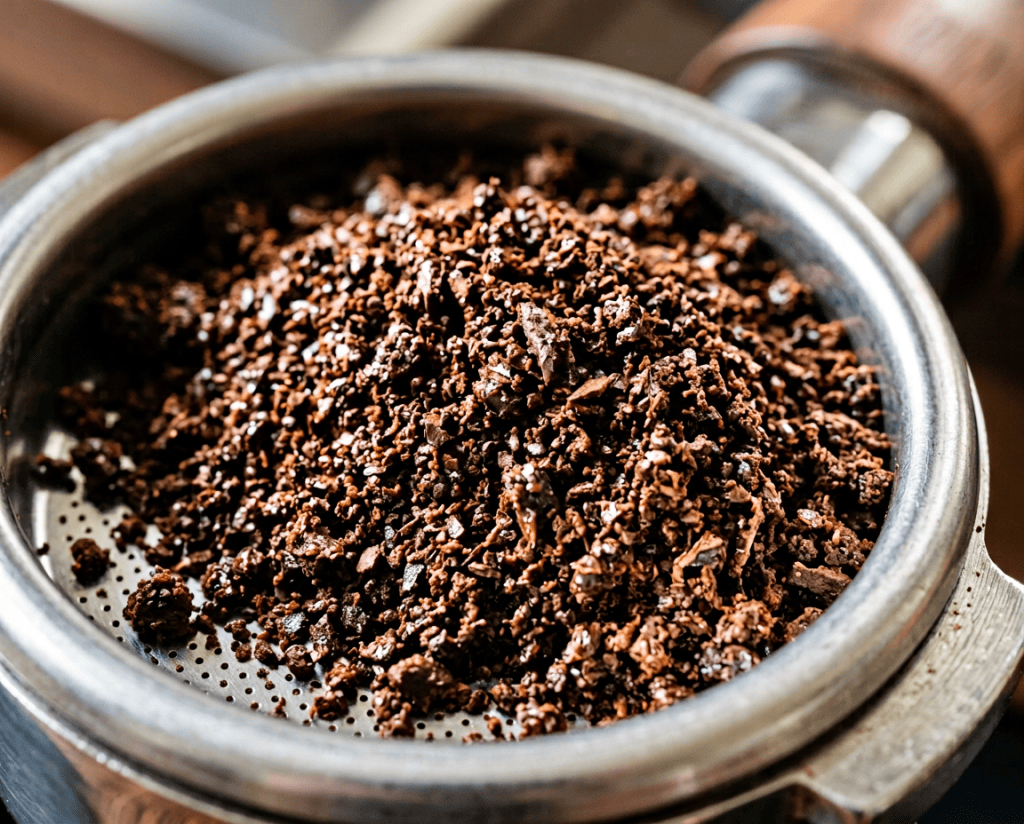
Espresso generally requires a fine grind—much finer than what you’d use for drip coffee, pour-over, or French press.
But there’s an important distinction:
Fine does not mean “as fine as possible.”
Your goal is a grind that creates enough resistance for the espresso to extract properly while still allowing water to flow evenly through the coffee puck.
Think of the progression like this:
French Press → Coarse
Drip Coffee → Medium
Pour Over → Medium-Fine
Espresso → Fine
The exact setting will vary depending on your grinder, coffee beans, roast level, freshness, basket, and espresso machine. In fact, two grinders set to the same number can produce different particle distributions, so grinder numbers aren’t universal.
That’s why learning to dial in by taste and extraction is more useful than simply copying someone else’s grinder setting.
Mistake #1: Using the Same Grind Setting for Every Coffee
Different beans can behave differently.
A grinder setting that works beautifully for one bag may not work for another.
When you open a new bag, expect to dial it in again.
Mistake #2: Grinding Too Fine
It sounds logical that “finer = better extraction.”
But that’s only true up to a point.
Grinding increasingly fine can eventually create flow problems and uneven extraction.
If your espresso tastes terrible and your grinder is already extremely fine, don’t automatically keep going finer.
Mistake #3: Changing Everything at Once
If you change your:
- Grind size
- Dose
- Yield
- Temperature
- Tamp
- Beans
all at the same time, you won’t know what fixed the problem.
Instead:
Change one thing. Pull another shot. Taste it. Adjust again.
That’s the easiest way to learn.
Even a great grinder can’t completely save an uneven coffee puck.
Mistake #4: Ignoring Distribution
Before tamping, distribute the grounds evenly throughout the basket.
The goal is to create a level, consistent coffee bed so water doesn’t find one easy path through the puck.
Uneven extraction can produce a frustrating combination of flavors—including sourness and bitterness in the same shot.
Why Does Espresso Need Such a Fine Grind?
Here’s the basic idea:
When you grind coffee, you break the beans into much smaller particles.
Smaller particles create significantly more surface area for water to interact with. Espresso has a relatively short extraction time, so a fine grind helps water access enough of the coffee’s soluble compounds during that short window.
If the coffee is too coarse, water can move through the puck too quickly and may not extract enough flavor.
If it’s too fine, the coffee bed can become overly resistant to water flow and extraction can become uneven.
That’s why finding the sweet spot matters.
Too Coarse → Water moves too quickly → Under-extraction → Sour / weak
Just Right → Balanced flow → Balanced extraction → Sweet / flavorful
Too Fine → Water struggles to flow → Potentially uneven or excessive extraction → Bitter / dry
Think of it like this:
And here’s the important part: grinding finer isn’t an automatic solution to every espresso problem. Extremely fine grinding can eventually make extraction less even rather than continuously improving it.
How to Dial In the Perfect Espresso Grind
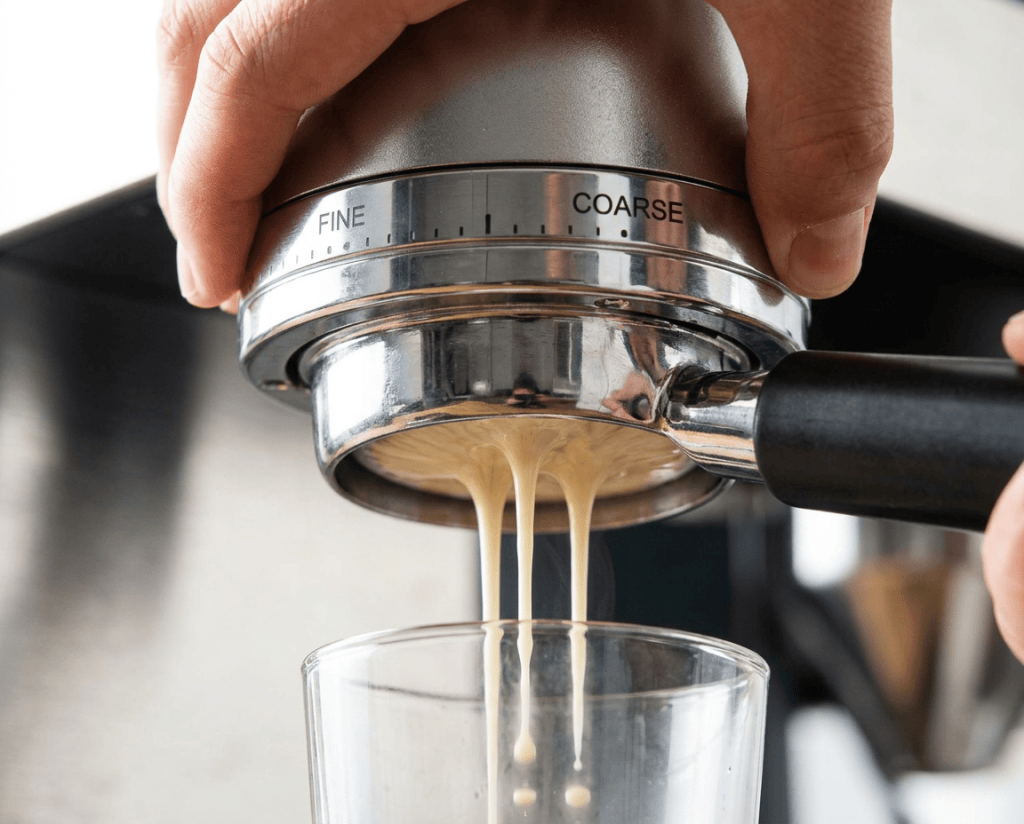
Dialing in simply means adjusting your coffee preparation until the espresso tastes balanced.
The Specialty Coffee Association describes dialing in as adjusting variables such as dose, grind and extraction to optimize the flavor of a coffee.
Here’s the easiest way to approach it at home.
Step 1: Start With Fresh Coffee Beans
Freshly roasted beans are a great starting point for espresso.
Choose beans you actually enjoy drinking, and keep them stored properly in an airtight container away from heat, light and moisture.
Don’t worry about finding the “perfect” bean before learning how to dial in. The same process works across different coffees—you’ll simply need to adjust your grinder.
Step 2: Use a Burr Grinder
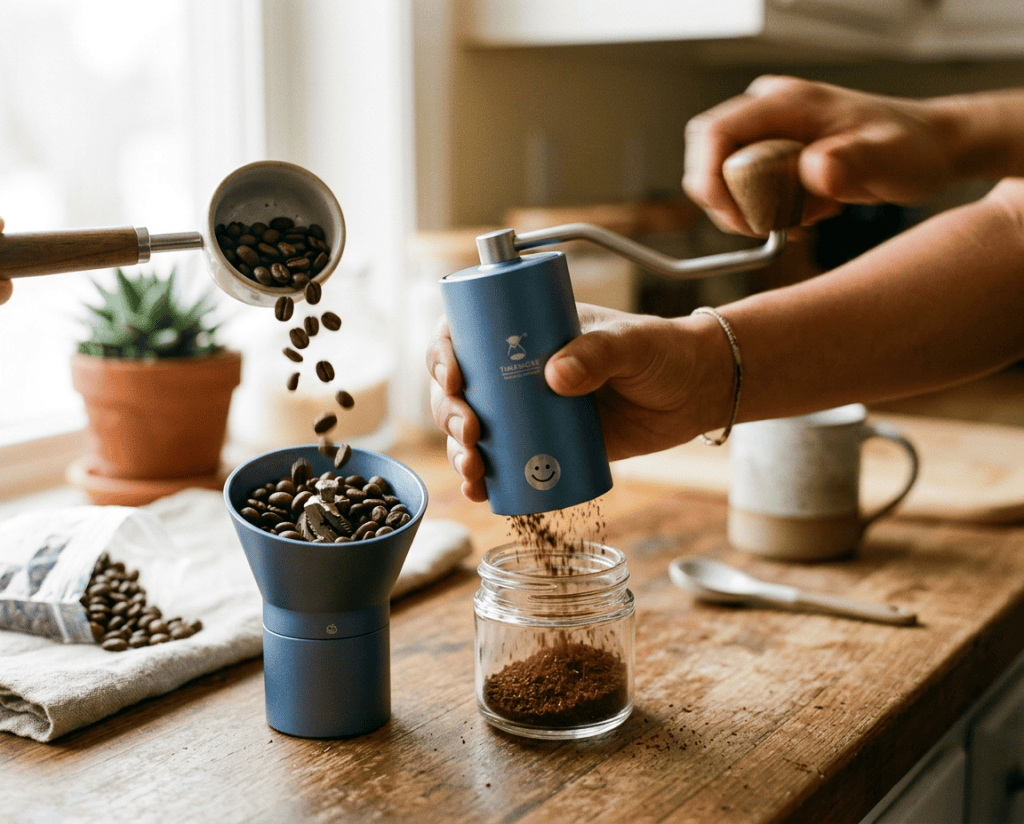
If you’re serious about espresso, a burr grinder is one of the most useful upgrades you can make.
A good espresso grinder gives you much more control over particle size than a basic blade grinder.
The goal isn’t simply to make coffee particles small. You want a consistent and controllable grind distribution so that water can interact with the coffee more evenly.
Grind consistency is one reason the grinder is such an important part of espresso preparation.
Step 3: Start With a Fine Setting
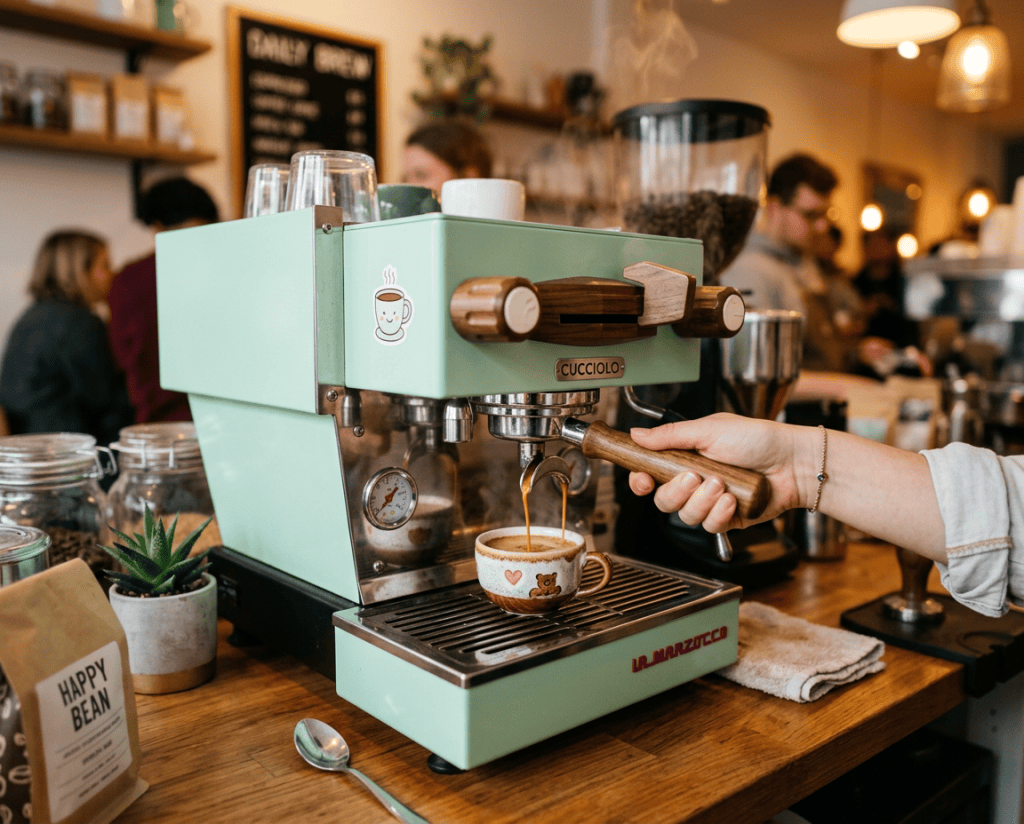
Start in the espresso range on your grinder.
There isn’t one universal number I can tell you to use because grinder settings aren’t standardized.
For example, a “10” on one grinder doesn’t necessarily equal a “10” on another.
Instead, think:
Espresso = fine
Then adjust from there.
Step 4: Keep Your Dose Consistent
One of the easiest ways to make dialing in frustrating is to change several variables at once.
For your first attempts, keep your coffee dose consistent and adjust the grind.
A traditional reference point is around 18–20 grams of coffee for a double espresso, although the correct dose depends on your basket and recipe. In a Barista Guild survey summarized by the SCA, 18–20 grams was the most commonly reported average dose range, with respondents averaging about 36.5 grams of beverage output.
For a simple starting recipe, you could try:
18g coffee → approximately 36g espresso
That’s a roughly 1:2 brew ratio.
But treat that as a starting point—not a rule you can never change.
Step 5: Watch Your Shot
Once you’ve ground your beans, distribute the coffee evenly in the portafilter and tamp consistently.
Then pull your shot.
A commonly referenced traditional espresso starting point is around 25–30 seconds, but shot time should not be treated as the only measurement of a good espresso. Taste and extraction matter too.
Instead of obsessing over hitting one exact number, use time as a helpful diagnostic.
If your shot runs WAY too fast…
Try grinding finer.
A finer grind generally increases resistance and slows water flow.
If your shot runs WAY too slowly…
Try grinding coarser.
A coarser grind generally allows water to move through the coffee bed more easily.
The key is to change one major variable at a time so you know what actually improved the shot.
Step 6: Taste Your Espresso
This is the step that matters most.
Don’t throw away a shot just because it took 27 seconds instead of 30.
Taste it.
Does it taste sour, sharp or thin?
You may be dealing with under-extraction.
Try grinding slightly finer.
Does it taste bitter, harsh or dry?
You may be dealing with over-extraction or an uneven extraction.
Try grinding slightly coarser.
Does it taste sweet, balanced and pleasant?
Congratulations.
You’ve probably found your sweet spot. ☕
The goal isn’t to chase a number on your grinder. The goal is to produce espresso that tastes good.
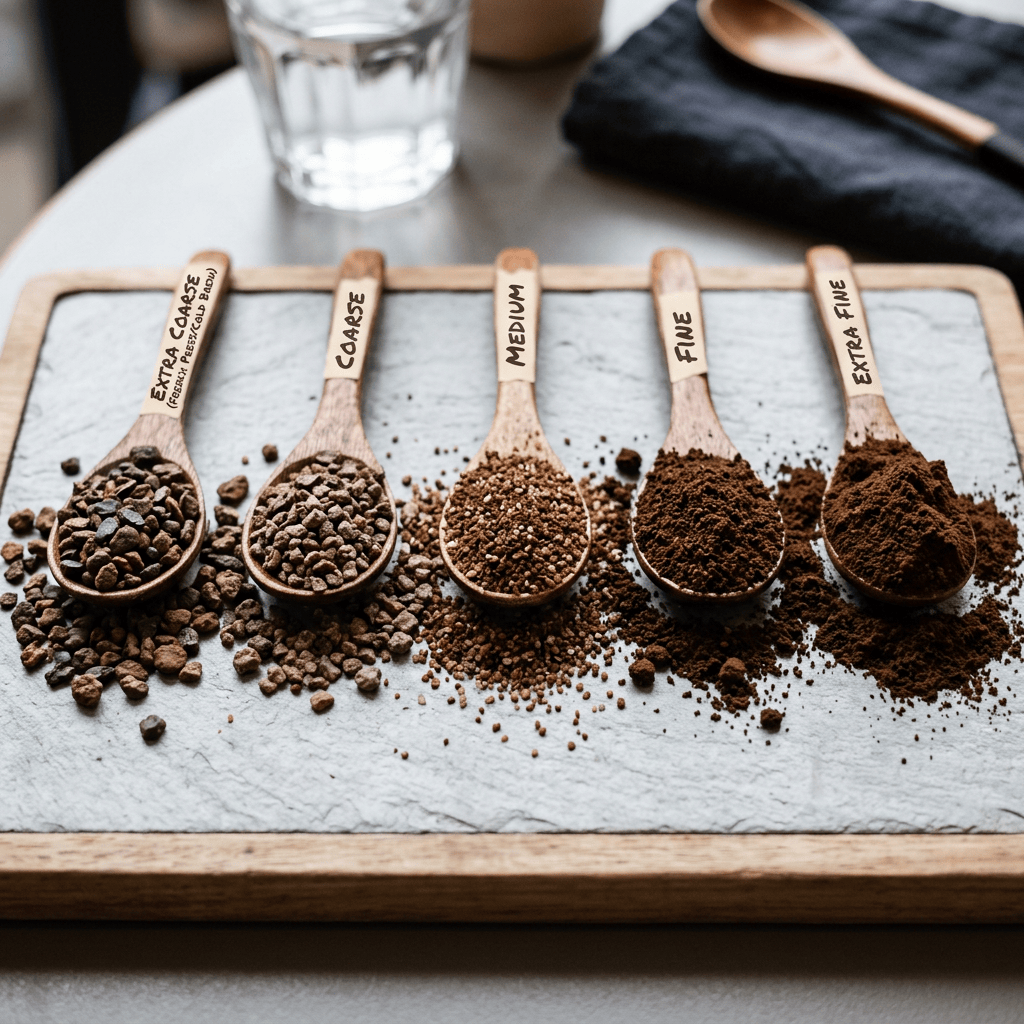
What Your Coffee Grounds Should Look Like
One of the easiest ways to understand grind size is to actually compare the particles.
Imagine putting these grounds next to each other:
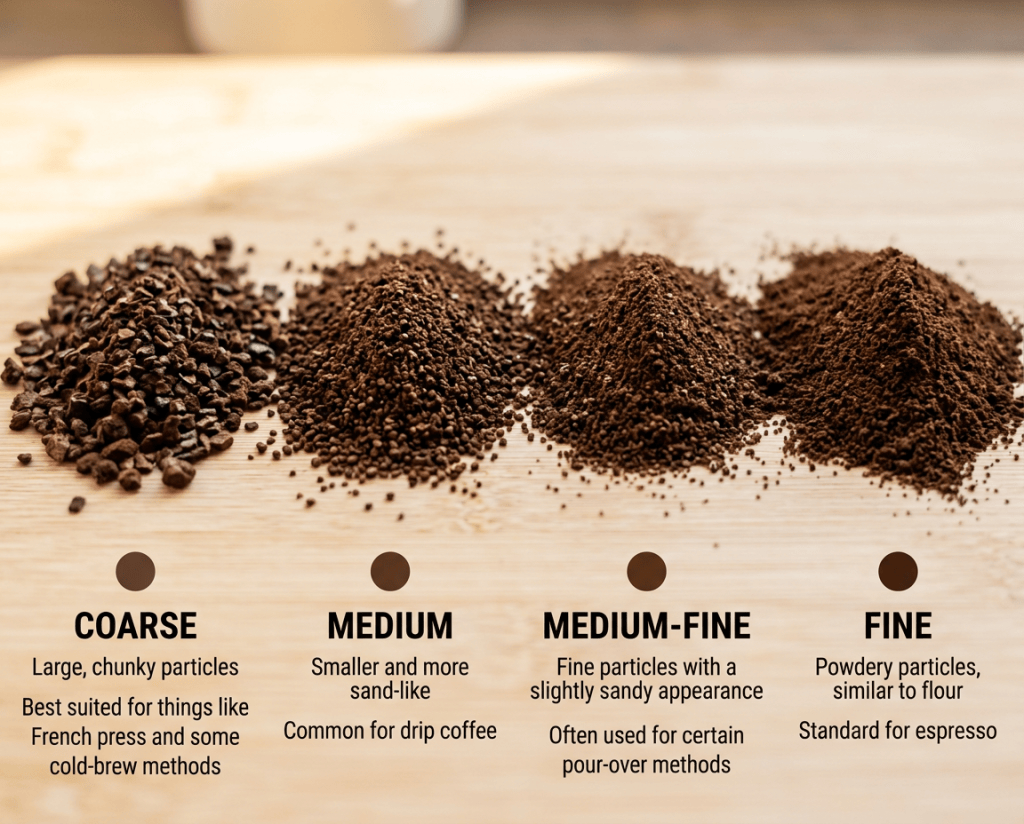
🟤 COARSE
Large, chunky particles
Best suited for things like French press and some cold-brew methods.
🟤 MEDIUM
Smaller and more sand-like
Common for drip coffee.
🟤 MEDIUM-FINE
Fine particles with a slightly sandy appearance
Often used for certain pour-over methods.
🟤 FINE
Very small particles with a texture approaching fine sand or powder
This is where espresso generally lives.
But don’t expect espresso grounds to look exactly like flour. The ideal particle distribution depends on the grinder and coffee, and visual appearance alone can’t tell you whether your shot will taste good.
My Favorite Grinders for Espresso
If you’re trying to make better espresso at home, I’d put a good grinder very high on your list of priorities.
Here are a few options I’d look at.
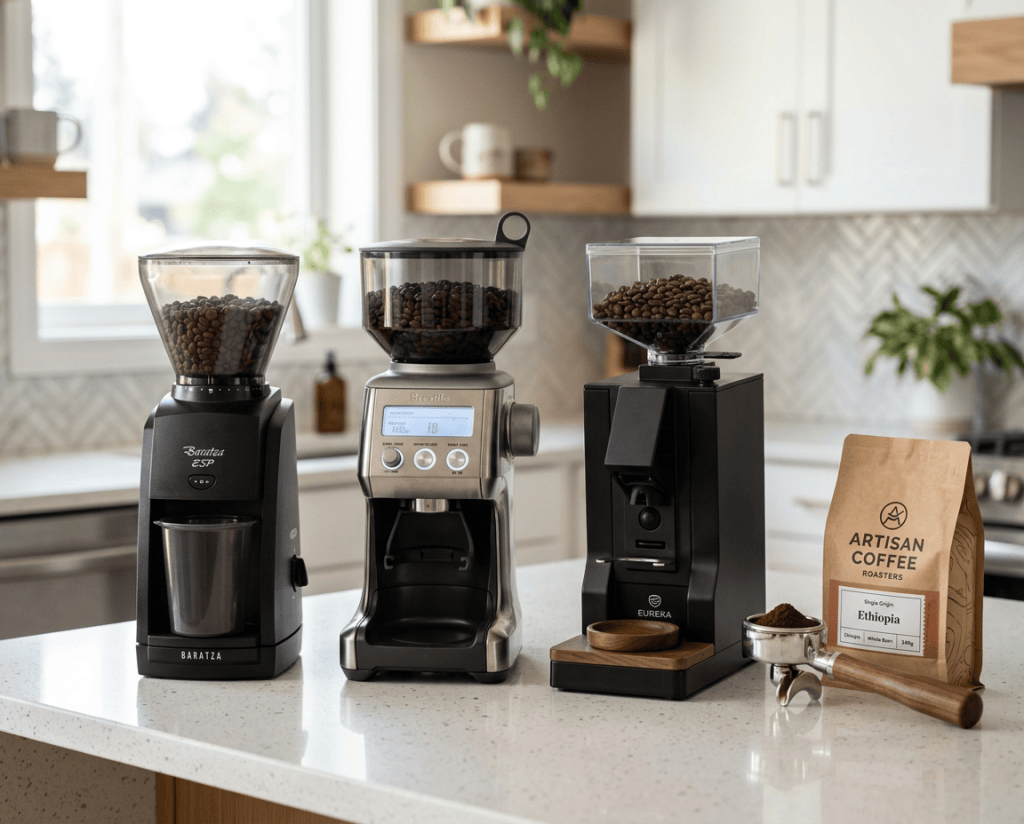
💰 Best Entry-Level Espresso Grinder: Baratza Encore ESP
The Baratza Encore ESP is specifically designed with espresso in mind and offers 40 grind settings. It’s a great option if you’re moving from basic coffee into espresso without immediately spending a fortune.
☕ Best for Precision + Versatility: Breville Smart Grinder Pro
The Breville Smart Grinder Pro gives you 60 grind settings and programmable dosing, making it particularly appealing if you want one grinder that can handle espresso while still being useful for other brewing methods.
✨ Best for a More Serious Espresso Setup: Eureka Mignon Zero 65
If you’re ready to invest more heavily in your espresso setup, a dedicated espresso-focused grinder can give you significantly more control over your grind.
My Favorite Espresso Machines for a Home Coffee Bar
A great grinder matters—but you also need a machine that lets you actually use those grounds effectively.
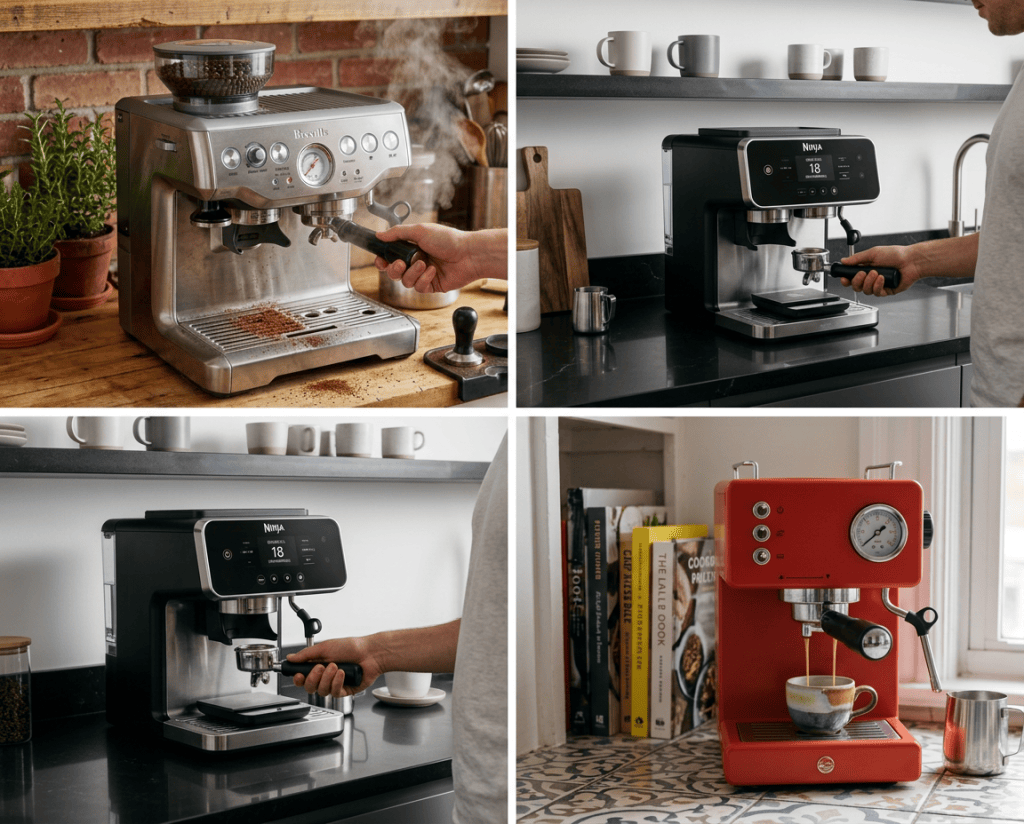
Breville Barista Express
The Breville Barista Express is one of my favorite all-in-one options for someone who wants to learn the process of making espresso at home.
It has a built-in stainless-steel conical burr grinder with 16 grind settings, an 18g target dose, low-pressure pre-infusion and a 9-bar extraction process.
The biggest advantage is that you get the grinder, espresso machine and milk steaming system together.
Ninja Luxe Café Premier
If you want something that takes more of the guesswork out of espresso, the Ninja Luxe Café Premier is an interesting option.
It combines espresso, drip coffee and cold brew in one machine, and its Barista Assist Technology can recommend grind size while its built-in scale handles weight-based dosing. It has 25 grind settings.
Neretva 20-Bar Espresso Machine
If you’re building a coffee setup on a smaller budget, the Neretva 20-Bar espresso machine is another option worth looking at.
It’s a compact machine with a steam wand and 20-bar pump system, making it a more approachable option for someone who wants to start experimenting with espresso without immediately jumping into a premium setup.
The SCA and coffee-education resources emphasize dialing in as a process of adjusting variables rather than relying on one universal recipe, which is exactly why keeping your changes controlled makes learning espresso much easier.
Turn Your Coffee Bar Into Your Own Café
Learning to dial in espresso is one of the most fun parts of building a home coffee bar.
You don’t need the most expensive machine.
You don’t need a commercial café setup.
And you definitely don’t need to get every shot perfect on your first try.
Start with good beans, a capable burr grinder, a consistent dose and a willingness to make small adjustments.
Eventually, you’ll start looking at a shot and thinking:
“Yep. That’s going to be good.” ☕🤎
And that’s when making coffee at home gets really fun.
More Home Cafe Co. Coffee Guides
If you’re building your dream coffee setup, check out:
The Ultimate Coffee Grind Size Guide
The Best Espresso Machines for a Home Coffee Bar
How to Make Better Coffee at Home
6 Cozy Fall Coffee Recipes Every Coffee Lover Needs to Try
Happy brewing! 🤎☕
This post may contain affiliate links. As an Amazon Associate, I earn from qualifying purchases at no additional cost to you. Thank you for supporting Home Cafe Co.!
Check Out My Website ☕
Looking for gear recommendations? I’ve put together pages for all my top picks:


Leave a comment